

Life's lessons from unexpected places
It's been a minute since I was here last; I've been busy with new projects and now an honor has been given me, an occasion to look back and assess my life and whether I've learned my lessons.

By Geoffrey Gevalt
I’ve been away from here. I’ve been busy with so, so many things. Rather, a few things that have taken, are taking, will be taking so, so much of my time. But that’s OK. Life is grand.
To understand the long piece below, I think you need some background. (And feel free to click the audio above to listen.) But get settled. Sit back. It’s a long ride. I began writing this shortly after I was informed that I was going to be receiving a major award, well, major in Vermont anyways – The Herb Lockwood Prize for Lifetime Achievement in the Arts. (Gosh; sounds like I’m dying.) And it came with a nice check.
Since I had to write a speech, I decided to, well, just write. This is what came out. I can tell you that my real speech bore no resemblance. This was more an exploration. But that’s the fun of writing.
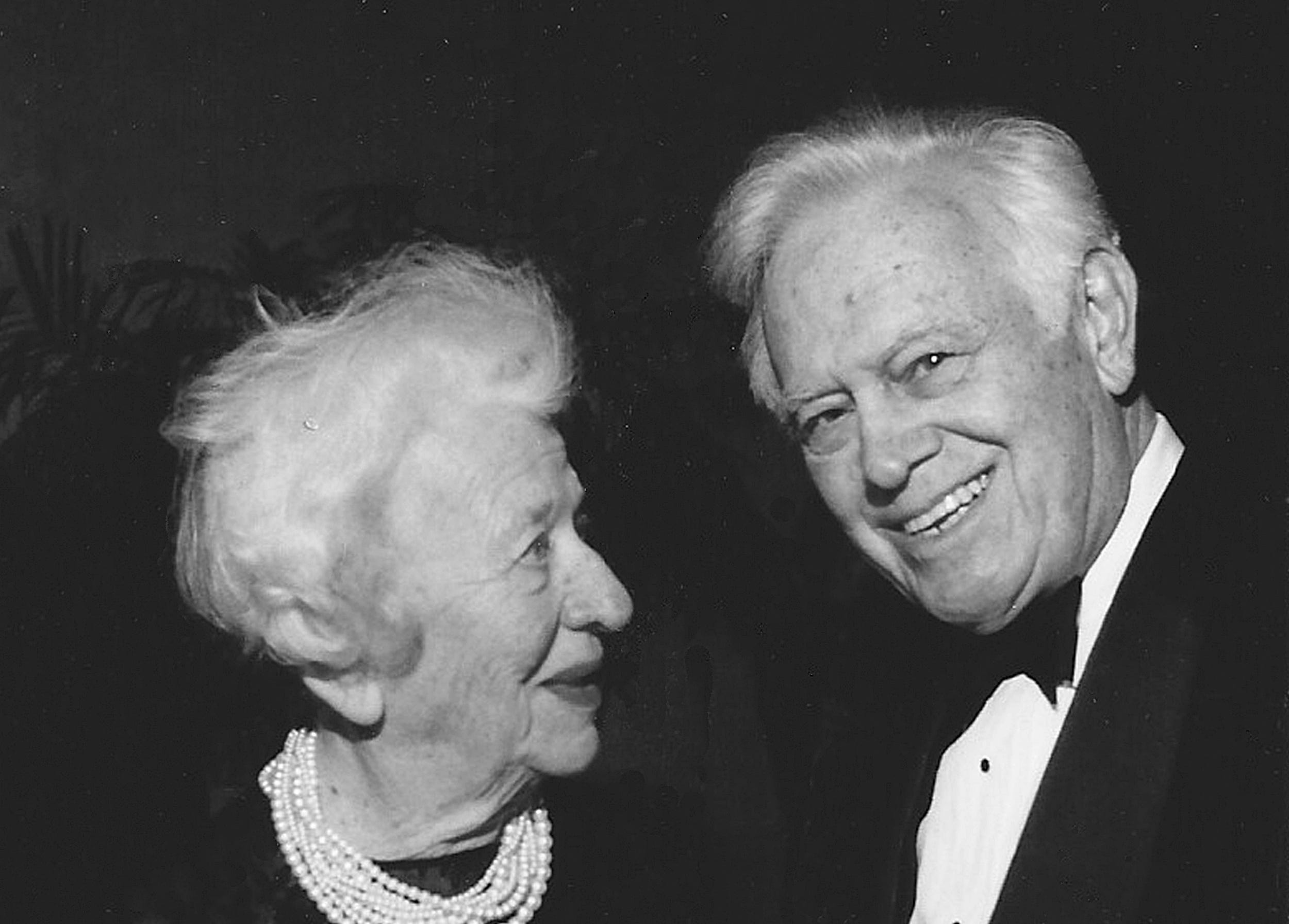
My aunt and uncle, Ruth and Frank Glazer, lived to their high 90s. They weren’t surprised. They had this whole old-age thing knocked.
Frank was a renown pianist. He premiered several of Aaron Copland’s pieces. Played with major symphonies all over the world. Taught at Eastman School of Music, and, after being forced to retire from Eastman at age 65, took a gig at Bates College. Bates had been clamoring for him. They got him for another 34 years.
Frank and Ruth had wanted to move full time to the family farm in Maine. They’d been fixing it up for years and were ready to move fulltime. Neither were people who sat idle so saying yes to Bates was no problem. And Ruth had some ideas up her sleeve.
So for 34 years, Frank played at least nine solo concerts a year at Bates and performed all over as well either solo or with several quartets and quintets, one of which he started. Ruth continued to manage his career and then set her sights on starting and organizing festivals and all sorts of other things.
Frank played his last solo concert at the age of 99. And nine months. But who’s counting? Frank was. He had six concerts planned for four states to celebrate his 100th birthday. He wouldn’t tell anyone what the program was going to be. “It’s a surprise, Geoffrey. But you’ll love it.”
I’ll never know. He died four weeks before his 100th birthday.
Over the years he had many lessons for how I should go about my life when I got older. Since I’ve arrived now at that not-so hallowed age grouping, they’ve come in handy. Here are his top four:
Always have a project that forces you to do something new.
Keep connections with young people.
Surround yourself with music.
If you are wide awake at 2 o’clock in the morning go ahead and get up and practice; or, in my case, write.
So Frank faced his older years by playing solo concerts – always with at least one piece he’d never played before. He taught students and practiced every day for from two to sometimes eight hours. And sometimes in the middle of the night.
I was with him for his last two weeks. He was in the hospital. He missed his piano. One day he got up into the easy chair and watched the Green Bay Packers defeat the Dallas Cowboys. (“It’s a Wisconsin thing,” he explained, a reminder that he was born and raised in Milwaukee.) In the hospital I was sending out regular ‘Frank Updates’ to 125 or so people on my email list – students, musicians he’d performed with, friends, uber fans, patrons, academics – and when they wrote back, I’d read their notes to him, and he would tell me a story about them.
As his centennial concert grew closer, people started writing to ask if he was going to be well enough to play. They needed to make plane reservations. Frank and I talked. We talked some more. Finally, he said, “Maybe I should postpone, Geoffrey.” Yes, maybe. You could always play in the fall, Frank. “Yes. That would be nice.” After all, he had never cancelled a concert in his entire career.
Decision made, he died a day and a half later. But not before watching the Packers. Not before eating a meal. And his last words, spoken late that night, were notes he hummed from some piece I did not know. He was just speaking in his other language.
Frank outlived Ruth by seven years. It was hard for him when she left. “I was always playing for her,” he said once; at the house; in the concert hall. He knew she was always listening. Even when he was practicing.
Ruth was a force. An organizer. An Energizer Bunny exuding love. And cheer. And intention. She could have corralled a herd of buffalo had she been given the opportunity. People noticed all that the moment they met her. She seemed to have the metabolism of a humming bird. And those sparkling eyes had such strength behind them, and, oh, that laugh. From the belly. From the heart. The deal-clincher.
At her memorial service, the president of Maine’s largest bank came up to me and told me a story about the first time he met Ruth. How she walked into his office unannounced, sat herself down in the chair in front of his desk and told him how the City of Portland needed a winter, weekday concert series and how his bank absolutely had to support this project and how she absolutely knew that he and his bank would be thrilled to be the primary sponsor of this series.
“I knew the only way she was going to get up and leave my office,” the banker said, smiling, “was if I wrote out a check; and whatever amount I might have had in my mind I needed to add a zero.” And so he did. And so his bank went on to be the largest supporter of the series for all the series’ years. And the two of them became great friends until she died at 95.
Ruth would have lived longer, but she went blind. It pissed her off. “I can’t do anything by myself anymore, Geoffrey,” she said once. Only once.
Ruth had many lessons of her own for me over the years. Here were her top four:
Think big.
If you want something, ask for it.
Always send a thank-you letter.
Eat plenty of chocolate.
Were she still around today she’d say that I regularly boot lesson number three. Sorry, Ruth. But she’d be proud of how well I’ve tried to fulfill her others.
Ruth and Frank have been on the front of my mind lately. Since I last darkened this platform I have:
Finished my novel, found an agent and am now counting up the rejections.
Done two stints as the interim managing editor for a Pulitzer-Prize-winning news organization in Santa Cruz, CA.
Become the volunteer, unpaid editor of my local newspaper, The Hinesburg Record. A rescue mission: Transform an irrelevant 10-times a year printed paper into a vibrant online weekly. (For several months last year my schedule was this: 4 a.m. awaken, double espresso, revise novel (agent suggestions); 8:30 a.m., breakfast; 9 a.m. work on The Record (report, edit, oversee final print editions, build website on Substack); 1 p.m., lunch; 2 p.m. edit Santa Cruz Lookout Local (remotely); 9 p.m. (or 10 or 11) finish and go to bed. Rinse. Repeat. Whew. My brain is definitely not as elastic as it once was.
But that’s how Ruth ran. That’s how Frank ran. That’s how I’ve been running.
But here’s where I really started thinking about Frank and Ruth: Out of the blue I was given an award. An award mostly for my work with young writers after creating and running Young Writers Project for 12 years.
I’m in glorified company. A MacArthur Genius recpient. A movie director. Several well-known writers. And, as mentioned, it came with a big check. Whoa.
Ruth and Frank would gush, of course. They would heap praise and love on me and tell me how much I deserved it just like any family member would do when something good happens in one’s life. And since they were also my “second parents,” Ruth probably would have sent me some chocolate.
But deep down they’d also understand something else I was feeling. Like how the whole thing made me feel awkward, as in, why me for gosh sakes? Plenty of other people are far more deserving. Don’t they know that none – zero zilch, squadoosh – of what I ‘did’ in those 12 years at Young Writers Project would ever have happened were it not for the dozens upon dozens of people who helped me, supported me, taught me, encouraged me? And what about all those kids?
And good gosh, do I have to stand there while people say nice things about me?
Yes, Frank and Ruth would have empathized.
Ruth liked to stay in the wings, in the back of the hall or before the concert whirling around like a dervish in the venue’s kitchen as she fixed plates of food for the intermission or reception afterwards and pulled some gooey chocolate thing out of the oven that would make her giggle and lick her fingers.
Frank liked performing, but it was the music that counted. It was the feeling he got from the music, from the audience. “Sometimes I feel like Beethoven is right next to me,” he said once. But he’d definitely understand how I was feeling.
When he was 95, Bates College gave him an honorary degree. His speech to the graduates was charming and funny and from the heart. The students said it felt like he was just talking to them which is why they leapt up with applause when he finished.
At lunch, sitting at the head table with the Bates College president and the college trustees, he turned to me and whispered, “What kind of degree did they give me, Geoffrey?” I don’t know, Frank. Perhaps a PhD? In Music? Pause. “Do you think they know I never went to college?”
So he would have understood when I twitched and looked awkward when a man I worked with long ago said horribly nice things about me. He was effusive and funny, and I knew it was heartfelt but I also kept wondering, who is he talking about?
For those keeping track, rather, for those who’ve made it this far, I am starting to wrap up this fish here.
Mostly I’ve been playing around, experimenting, trying out different ideas for the speech I am being asked to give, trying to figure out exactly what I am thinking, what I am feeling, what I should say about being honored for working my butt off on something I loved doing with a whole lot of help.
I’m drawing a bead on what to say. Sometimes writing teaches you what not to say. So Frank and Ruth will not be a part of my speech. I will single out a half-dozen or so people who, like Frank and Ruth, do things without a thought of getting praise, people who said to me – early and often – ‘Yes. How can I help?’ People who pushed me, encouraged me, challenged me, supported me.
And I’ll say a few words about the kids – the highlights, the tiny stories from those 12 years that I hope will never leave my memory.
And constraints on the time-space continuum, as they say, will also prevent me from this ending that I just thought of.
Nate Methot gave it to me. Nate is a 42-year-old man who’s been living with ALS for 15 years. You read that right. Diagnosed at 27 while he was living his life pedal to the metal. An outdoors lover, hiker, kayaker, you name it. Always on the move. Now he’s strapped to a motorized chair and types with one finger.
Three months ago I met him and asked if he’d write a column on living with ALS for The Hinesburg Record. He said sure. He came up with a name: “Life on the Head of a Pin.”
His second column, published last month is entitled “You Are What You Do (Not What You Did).” I asked him of it would be OK to quote his last three paragraphs in my speech. Here it is:
“… if I woke up tomorrow, health fully restored, thirty pounds of muscle piled back onto my frame, I’d have quite a story to tell. A best-selling memoir in my mind. But I don’t know how I’d sit still to write it. Like asking schoolchildren to remain at their desks after the bell, prisoners to stay put in their concrete block cells if there were no bars, I could never volunteer to live in this box.
“I’d be out in the world doing all that I could: Old, new, everything. Fearlessly. Without regrets. My life would be big, and full, every moment cataloged and appreciated. I’d be back to myself, only more so. Until that day, outside that dream, I adapt.
“You are what you do, not what you did. It’s not entirely true, of course; there are many versions inside each of us. But it’s a mindset: Do what you can; forget what you can’t. It’s a lesson I was taught much too soon.”
That’s Nate’s lesson.
My lesson is this: Be grateful.
I am so very grateful for 12 years of work with thousands upon thousands of young writers, with thousands of teachers and hundreds of writers and teachers who, like me, think writing is important. I am so grateful to be the 2026 Recipient of the Herb Lockwood Prize. It is an honor. Truly.
And in the spirit of the late Herb Lockwood – who gave himself to all his projects and to the art around him – I am donating half to The Record to help perpetuate the new, paid Journalism Fellowship we’ve created for new graduates. We must save community journalism. We also must do whatever we can – however small – to help aspiring journalists get the experience and portfolio they need to get a full-time job, to be the future of journalism.
The other half of the award I am going to use to hire a new editor for one last pass through on my novel, Hiram Falls. The rejection letters have been sweet, but they also have told me what I need to do to improve the book and make it something memorable.
I’ll also set a little aside to buy some chocolate.
For those who actually want more (God bless you) here is the news release about my award https://www.herblockwoodprize.org/2026-winner.html and the video below of the award ceremony.
What a wonderful and inspiring article. I read it with great appreciation and have long valued the quality of your work. Please accept my sincere congratulations on this well‑deserved award. I look forward to continuing to read your writings and following your future contributions.
This was a treat to hear once again, about Ruth and Frank, and Nate sounds and must be truly remarkable. Your plan for your reward money is so you and just the best use of it. I have one thing to add for you. Play and be playful with your grandson whenever you can. He’ll keep your writing chops going too.